
Chromatic aberration
Last updated
Chromatic aberration is a Distortion effect.
What it does
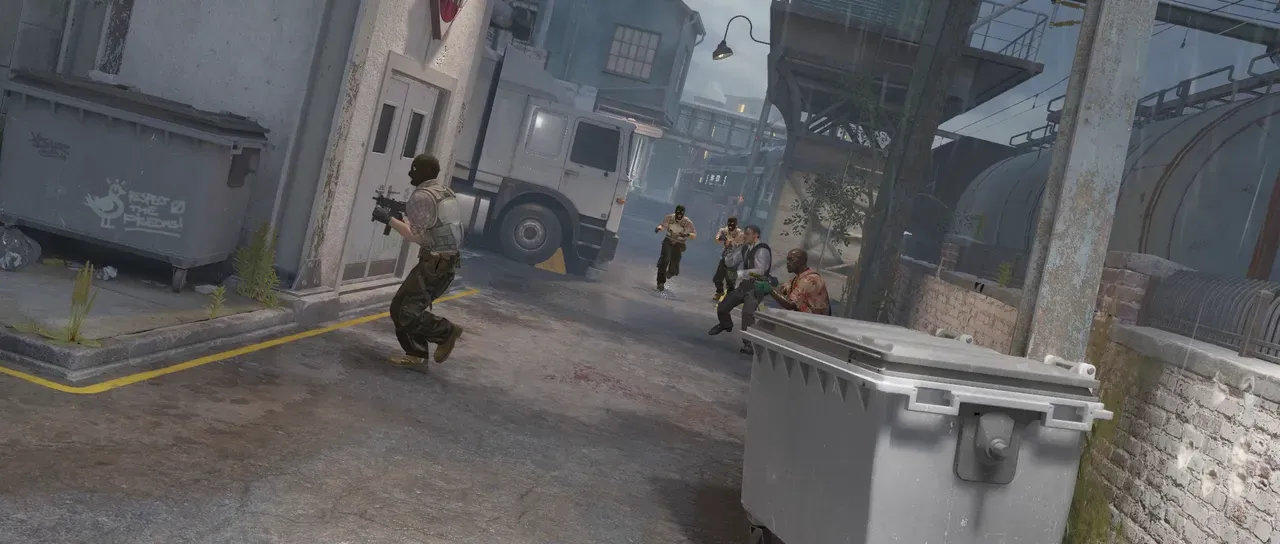
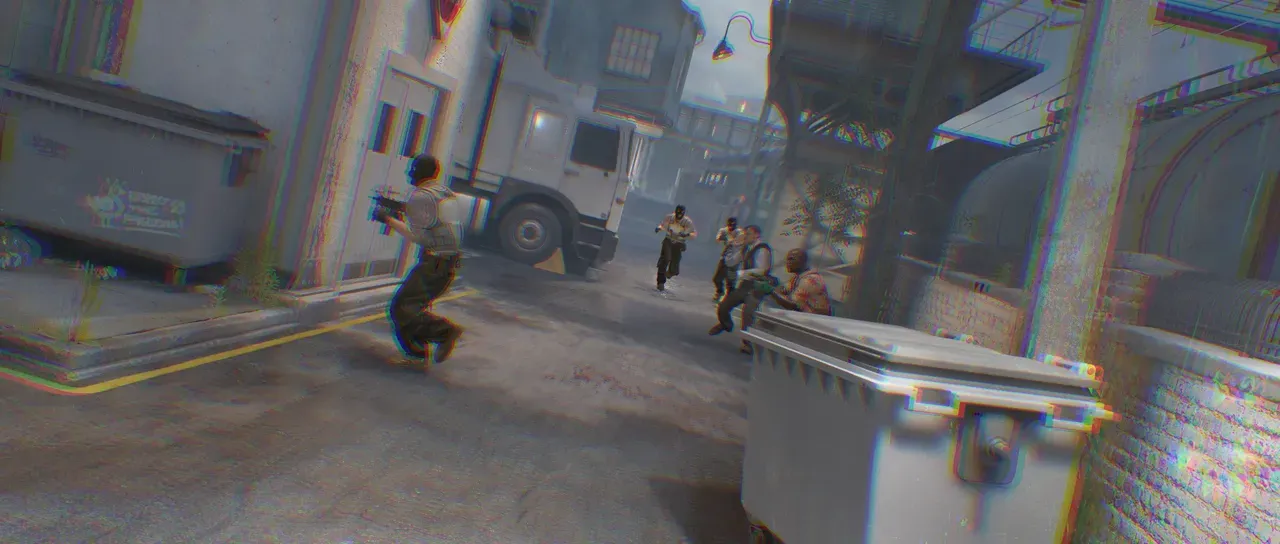
Section titled “What it does”Splits the colour channels based on their distance from the centre of the image.
Can be split by simple RGB, or calculate the split amount based on a colour’s physical wavelength.
Parameters
Section titled “Parameters”| Parameter | Control | Range | Default | Unit |
|---|---|---|---|---|
| Amount | Slider | 0 to 20; higher | 4 | Pixels at composition size |
| Colour 1 | Colour | Each channel 0 to 1, scene-linear | 1, 0, 0, 1 | - |
| Colour 2 | Colour | Each channel 0 to 1, scene-linear | 0, 1, 0, 1 | - |
| Colour 3 | Colour | Each channel 0 to 1, scene-linear | 0, 0, 1, 1 | - |
| Wavelength | Checkbox | On or off | Off | - |
| Samples | Slider | 3 to 64 | 16 | - |
| Mix | Slider | 0 to 100 | 100 | Per cent |
| Blend | Dropdown | Normal · Darken · Multiply · Colour burn · Linear burn · Darker colour · Add · Lighten · Screen · Colour dodge · Lighter colour · Overlay · Soft light · Hard light · Linear light · Vivid light · Pin light · Hard mix · Difference · Exclusion · Subtract · Divide · Hue · Saturation · Colour · Luminosity | Normal | - |
| Matte | Layer | Any layer in the composition | None | - |
| Invert | Checkbox | On or off | Off | - |
| Channel | Dropdown | Luminance · Alpha · Red · Green · Blue | Luminance | - |
In the Effect Controls panel:
- Matte scales Amount per pixel: white fringes at the full Amount, grey less, black not at all. Invert reads that matte inverted.
What each control does
Section titled “What each control does”- Amount is the amount to scale the offset at the frame’s edge.
- Colour 1, Colour 2 and Colour 3 tint the inward, centred and outward taps.
- Wavelength changes the RGB-stepped aberration for a smooth wavelength-based dispersion.
- Samples is how many taps fill the offset while Wavelength is on.
- Mix: how much of the result replaces the original.
- Matte and Invert drive the strength of the effect from another layer’s brightness; see Effects.